Integration services
Your tools.
Working together.
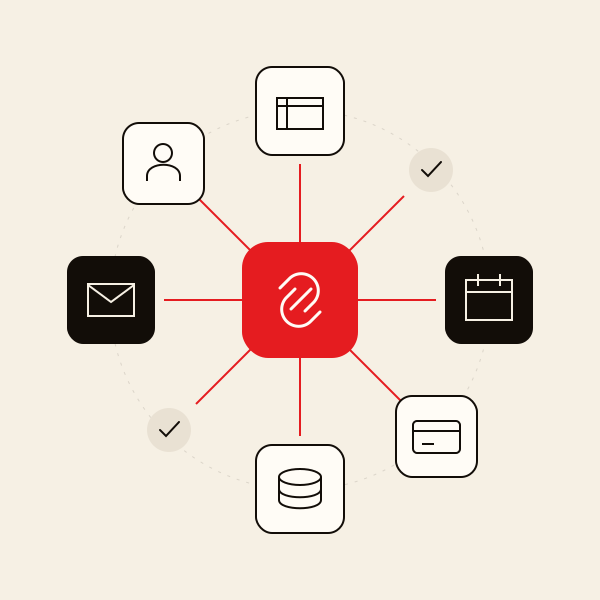
Integration services connect websites, CRMs, payments, bookings, and APIs so your team can reduce manual handoffs.
Clear scope. Thoughtful delivery. Real ownership.
What we can do
The right expertise.
Right where you need it.
CRM & payments
Data synchronization
Connected workflows
How we work
From first conversation
to a confident handover.
Discover
We understand the need and define the scope.
Deliver
We build, test, and keep you in the loop.
Handover
You get the result, clarity, and a path forward.
Explore specialist services
Specialist service
API Integration Development
API integration development connects applications through authenticated interfaces so that agreed business data and actions move between systems reliably.
Explore →Specialist service
CRM Integration Services
CRM integration connects website forms, sales tools, support systems, and operational applications to a shared customer-record workflow.
Explore →Plan your next step
Integration
API Integration Planning: Data Mapping, Webhooks, and Reliability
Plan an API integration around the business event, authoritative data source, field mapping, credentials, delivery behavior, and recovery path. Test duplicate and delayed events as well as normal traffic. A connection is complete only when the business result is confirmed in the destination system.
Explore →Integration
CRM Integration: Preventing Duplicates and Lost Lead Handoffs
A useful CRM integration needs identity rules, field ownership, lead assignment, conflict handling, and reconciliation. Define when to create a record and when to update one before connecting forms or sales tools. Make rejected records and unassigned leads visible to an owner.
Explore →A little clarity
Good questions.
Straight answers.
Can you connect WordPress to our CRM?
Yes. We can connect WordPress forms, ecommerce, memberships, or custom workflows to a CRM through native APIs, webhooks, or a suitable integration layer.
Do you build custom API integrations?
Yes. We can design and build direct API connections or middleware when standard connectors cannot support the required workflow.
How do you handle duplicate or invalid data?
We define validation, identity rules, deduplication, error queues, and review paths as part of the integration instead of treating them as later fixes.
Can you monitor an integration after launch?
Yes. Monitoring, alerting, logs, retry behavior, and ongoing support can be included based on how critical the data flow is.
Your next move
Let’s build something
that works for you.
Bring the idea. We’ll help shape the next step.